
Image

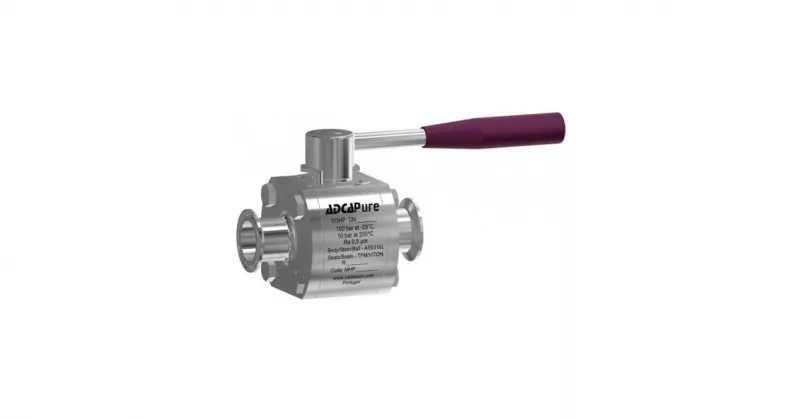
Ball valves have carved out a privileged spot in industrial fluid control, and that did not happen by chance. From a domestic water-treatment unit to a refinery handling hydrocarbons at scorching temperatures, this valve solves problems other designs simply cannot touch. Why? Because it combines a tight shut-off with remarkable durability and —something many operators appreciate— an operation that does not call for an engineering degree to grasp.
This guide walks through the types on the market, the specific traits of each one and the criteria that should drive the choice in every case. A solid grasp of the strengths and limits of each model lets you make calls that, over time, optimise system performance and stretch the life of the whole installation.
A ball valve is, at heart, a mechanical device that regulates the passage of fluids through a bored sphere rotating on its axis. The principle is elegant in its simplicity: when the hole through the sphere lines up with the pipe, the fluid runs freely; rotate it ninety degrees and the passage is completely blocked. As blunt as that.
What sets this mechanism apart is its ability to close quickly and completely. In situations where flow has to be cut off with precision —think of an emergency or a process that asks for exact control— that immediate response makes all the difference. These valves work well at both high pressures and temperatures that would push other designs past breaking point. The simplicity of the mechanism not only makes operation easier; it also cuts leakage and lowers maintenance costs throughout the valve's service life.
The body forms the structure that holds every internal element and provides the connections that drop the valve into the process line. It comes in a range of materials, although stainless steel stays the most common option thanks to its corrosion resistance and proven durability. The body has to take system pressures without losing integrity, even when temperature and pressure conditions shift around.
Inside sit the bored sphere —the heart of the shut-off mechanism— together with the seats that ensure tightness once the valve is closed. Depending on the design, the body can come in a two-piece or three-piece configuration, each with its own perks: three-piece versions make access for maintenance easier, while other layouts cope better with certain pressures. The diameter, of course, has to match that of the pipe where the valve will live; otherwise, unnecessary flow restrictions creep in.
The seat is one of the most delicate components when superior sealing and zero leakage are the requirement. Usually made from elastomeric materials or engineering plastics such as PTFE, the seat forms the contact interface between ball and body. In floating ball valves, the seats absorb the pressure the fluid itself exerts on the ball, building a seal that grows tighter as system pressure rises. It sounds backwards, yet it works: the higher the pressure, the better the shut-off.
The mechanism works especially well when handling aggressive chemicals or fluids at high temperatures. No shortcuts here: the seat material has to be compatible with whatever flows through the valve. A poor-quality or badly specified seat loses its sealing properties inside a few months. Good ones, by contrast, keep friction low and let the valve open and close effortlessly even after a year sat idle.
With the valve fully open, the fluid passes in a straight line. No bends. No obstructions. This full-bore geometry keeps pressure loss low and lets the maximum possible flow rate run through. Turn the stem and the ball rotates inside the body, either lining up with the pipe to give a clear path or sitting perpendicular to it, blocking it completely.
Full bore valves share the same internal diameter as the pipe they are connected to: zero restriction. Reduced bore valves, with a slightly smaller opening, take up less space and cost a touch less; they are a sound choice wherever maximum flow rate is not a priority. The interesting bit about these valves is that they work just as well with gas, dense liquids and corrosive products. That versatility explains why they turn up in such a wide range of industries.
There is plenty to choose from. Each type answers specific working conditions, and mixing them up costs money. The main families are floating, trunnion-mounted, top-entry and multi-port. Understanding what separates them prevents specification errors and, in the end, saves real money.
Choosing the right type depends on several factors: pipe diameter, pressure and temperature conditions, type of fluid and maintenance requirements, among others. The range of options lets engineers and designers land on a valve that meets the technical spec while also offering the best cost-benefit ratio for each project.
The floating ball valve is the most widespread design in industry. Here the ball is not mechanically held in place; it "floats" between two elastomeric seats. This configuration lets the fluid pressure push the ball against the downstream seat, creating a seal that strengthens as pressure rises. An elegant solution.
These valves work especially well in low- to medium-pressure applications, generally up to 1000 psi. Their simple design keeps manufacturing and maintenance costs reasonable, making them an economical option without sacrificing performance. They turn up widely in water treatment, gas distribution, chemical processing and plenty of other industries where reliable flow control is the order of the day. Their bidirectional tight shut-off makes them the favourite anywhere leaks must be blocked in either direction.
The size range stretches from half-inch valves that fit in the palm of your hand to large-diameter giants installed in intercontinental pipelines. The trunnion-mounted ball valve carries shafts that support the ball top and bottom. The result? It spreads the load better and copes with pressures that would tear apart a floating valve of the same size. That is why it gets used where the forces involved are brutal.
Top-entry valves come apart from above, with no need to lift the body out of the line. In a plant that cannot stop, that is worth its weight in gold. Three-way valves let flows be diverted or mixed in complicated piping configurations. Each design has its niche; the trick is not to push it past where it belongs.
Manual or electric actuator? It depends. Manual valves come with a lever or handwheel the operator turns by hand. Reliable, cheap, no power supply needed. If the valve cycles only a few times a month, a manual one is more than enough. When dozens of valves have to be coordinated from a control room, or sit in spots no one wants to enter, the electric actuator pays for itself.
Electric valves respond to a signal and act within seconds. The capability allows automatic sequences and integration with SCADA systems. In large plants, where reaction time to an alarm can prevent an accident, those couple of seconds matter. When deciding, weigh frequency of operation, physical accessibility, budget and whether the existing control system can handle digital signals.
Compared with gate, globe or butterfly valves, the ball valve closes more quickly. A quarter-turn and the job is done. In an emergency, that speed can keep a minor incident from turning into a catastrophe. The internal design, with few moving components and a straight flow path, leaves fewer places where something can go wrong.
Another perk that does not always get a mention: these valves start up well after months of sitting idle. Other designs stick or corrode at the seats; ball valves, when properly specified, turn just as smoothly as they did on day one. They also swallow practically anything: clean water, slurries, acids, gases. That versatility, combined with minimal maintenance, explains why so many engineers reach for them on applications where failure is not on the table.
The sealing of a well-made ball valve beats most alternatives. When it closes, it really closes. The seat, whether elastomer or engineering plastic, compresses against the polished ball and lets nothing through. On floating designs, the system pressure itself pushes the ball against the downstream seat, so the harder the fluid presses, the better the seal. It looks like black magic. It is pure physics.
When the system carries toxic gases, flammable products or fluids that cost a fortune per litre, even a tiny leak is already a serious problem. These valves carry reinforced stem packings and designs that close every possible escape path. In pressurised systems or chemical plants where a single drop out of place can stop production —or worse— that level of tightness is no luxury: it is a requirement.
A 316 stainless steel valve will last decades exposed to seawater, dilute acids or aggressive industrial environments. Exotic alloys such as Hastelloy or Monel go further, holding up against chemicals that would eat ordinary steel within weeks. PTFE or ceramic seats keep their properties even when abrasive or corrosive fluids circulate through them.
This durability translates into a service life that can stretch to twenty, thirty or more years on suitable applications, well past what valves built from less resistant materials manage. Picking the right materials from the outset means not having to replace valves every few years. The higher initial cost is amply paid back the moment you no longer have to shut the plant down to swap out degraded components.
Trunnion-mounted ball valves handle pressures north of 10,000 psi. That puts them in refineries, petrochemical plants and injection systems where pressure is savage. The mechanical support of the ball spreads the forces and stops the seat from deforming or blowing out.
On temperature, there are designs that run above 500 °C with metal seats and extended stems that protect the gland packing from the heat. Thermal expansion of the body, which on other designs would mean leakage or seizing, gets managed through geometries built to absorb it. That capability of operating under extreme conditions opens doors in sectors where other valves would not even make the shortlist.
Choosing badly costs money and headaches. An undersized valve breeds pressure losses; an oversized one is wasted spending. If the material does not stand up to the fluid, you will be looking at leaks or a seized valve within months. The first step, before opening any catalogue, is to know what is going to flow through, at what pressure, at what temperature, and how often the valve will be cycled.
Sounds like a lot, although a structured approach simplifies it. It pays to consult specialist manufacturers or experienced engineers who can offer guidance based on similar applications. Time invested in the selection phase comes back as years of trouble-free operation, whereas hasty decisions based purely on initial price tend to cost significantly more in the long run.
The valve has to match the pipe. Fit a reduced bore valve where maximum flow is the requirement and you will have pressure losses, possibly flow velocities that erode the inside. Full bore valves, sharing the same internal diameter as the pipe, add no restriction at all. That matters on high-capacity systems where every tenth of a bar counts.
Even so, full bore is not always essential. On certain secondary lines, a reduced bore valve does the job and costs less. What you cannot skip are the hydraulic calculations: expected flow rate, viscosity, system pressure characteristics. These days any engineering software will give you the optimum size in minutes. Specifying by eye works out expensive.
304 stainless steel covers most standard applications. 316 copes better with chlorides and marine environments. For concentrated acids or strong alkalis, the bar moves up to Hastelloy, Monel or titanium. Carbon steel with a good coating works for water or compressed air at a friendly price.
Seats follow the same logic: PTFE for broad chemical compatibility and moderate temperatures; special elastomers for specific services; metal when heat would melt any plastic. It is not enough to look at chemical resistance alone: it has to be cross-checked against the working temperature and pressure. A material that copes with an acid at 20 °C may degrade at 80 °C. Thorough compatibility checks dodge unpleasant surprises.
Pressure dictates the type of design. Low or medium, floating valve. High, trunnion-mounted. Temperature dictates the seat material: standard elastomer, high-temperature PTFE or metal. The fluid —viscosity, whether it carries solids, whether it is chemically aggressive— defines the internal configuration and sometimes calls for extras such as purge systems or reinforced packings.
Frequency of operation matters more than it might appear. A valve that opens and closes a hundred times a day benefits from an actuator that saves an operator from wear and tear and ensures consistency. One that moves twice a year works fine with a handle. When access is difficult, top-entry valves allow maintenance with no need to cut the pipe. In the end, construction codes and sector standards impose their own requirements that have to be built into the selection.
These valves are everywhere: municipal water plants, refineries, power stations, chemical works, ships, the food industry. Anywhere a fluid needs controlling, a ball valve is probably doing the job. In processing, they regulate the passage of raw materials, intermediates and finished products through kilometres of piping.
Utilities rely on them to distribute drinking water and natural gas to millions of homes. Refineries lean on them for crude oil and its derivatives at extreme pressures and temperatures. Pharmaceutical and food plants trust sanitary versions that are easy to clean and never contaminate the product. Ships fit valves made from seawater-resistant alloys into propulsion, ballast and auxiliary systems. That ubiquitous presence says a great deal about their reliability.
In a drinking water plant, ball valves show up at every stage: intake, filtration, chlorination, storage, pumping. They control flow rates, isolate equipment for maintenance and let the team respond quickly when something fails. The tight shut-off keeps dirt from getting in and treated water from being lost. Materials approved for contact with drinking water —stainless steel, lead-free bronze— guarantee that nothing harmful leaches into the supply.
In extensive distribution networks, they make isolating sections for maintenance straightforward, with no service interruption across the wider area. Their fast quarter-turn operation enables immediate responses to emergencies such as ruptures in main lines. In agricultural and industrial irrigation systems, they regulate flow to different zones, optimising water use. The long life of these valves, often beating twenty years in water service, makes them a sensible investment for infrastructure that has to run for decades with minimal maintenance.
The chemical industry tests any material. Acids, bases, solvents, oxidising agents: each fluid attacks in a different way. Valves for these duties come in 316 stainless steel as a minimum, and often Hastelloy C or PTFE or PFA linings that build a complete barrier between the metal and the fluid. Tight shut-off matters even more here: a single drop of acid out of place can burn somebody or trigger an environmental alarm.
In process plants, these valves regulate the flow of reactants into reactors, control purges and let equipment be isolated for maintenance with no need to drain the whole system. Ceramic or reinforced PTFE seats withstand chemical attack without losing sealing capability. The combination of chemical resistance and mechanical reliability has made them a fixed component of any plant handling aggressive substances.
Oil and gas are probably the toughest proving ground for a valve. In a refinery, crude moves at pressures north of 1000 psi and temperatures north of 200 °C. Trunnion-mounted ball valves, with the ball supported by shafts, spread the loads and stand up to them without deforming. On offshore platforms and drilling wells, pressures can climb to 10,000 psi or more; that is where specialist designs come in, tested and certified for those levels.
A failure in this environment can mean a spill, an explosion or both. These valves come with back-up seals, trapped-pressure relief systems and extended stems that protect the gland packing from extreme heat. On transcontinental gas pipelines, large-diameter ball valves act as isolation points that allow the line to be sectioned without interrupting service. The materials and the precision manufacturing let them last decades in an environment that does not forgive mistakes.
Floating ball valves work well for low and medium pressures: good sealing, tight cost, simple maintenance. When pressure rises and the forces on the ball climb too high, you have to move to trunnion-mounted. If access is difficult or downtime is brutally expensive, top-entry valves let you pull the internals without taking the valve out of the line. When the requirement is to divert or mix flows, three-way valves do in a single body what would otherwise demand several valves and extra piping.
For installations with limited maintenance access or with downtime that has to be minimised, top-entry valves allow servicing without removing the valve from the line. On applications calling for flow to be directed between multiple routes, a three-way valve offers functionality that several conventional valves could not deliver efficiently. Automation should be on the table when frequent operation, remote control or integration with process management systems are the requirements. Understanding these distinctions and applying them correctly ensures every valve installed is set up for its specific role.
Below 100 °C and 600 psi, floating valves with standard elastomer seats perform well and do not strain the budget. As temperature rises, you have to move to high-temperature PTFE and, above around 260 °C, to metal seats. Pressure follows a similar pattern: at around 1000 psi, the floating design starts to come up short and trunnion-mounted should be on the table.
When high pressure and high temperature coincide, the challenge multiplies. That is where specialist designs come in, with top-of-the-range materials and very tight manufacturing tolerances. Manufacturer catalogues include pressure-temperature tables for each model and material combination; consulting them before specifying heads off surprises in service.
In a nuclear power station, a plant handling lethal toxics or a fire-protection system, the failure of a valve carries consequences that dwarf the cost of the part itself. Selection here is governed by strict standards, third-party certification and traceable documentation for every component. No room for improvisation.
These valves come with visible position indicators, redundant seals and fail-safe designs that leave the valve in a safe position if power or air is lost. Material traceability, test reports and independent certification verify that everything matches what was specified. Paying more for a top-quality valve works out cheap compared with the consequences of a failure in a system where failures are not allowed.
Compared with the gate valve, the ball valve closes in a quarter-turn rather than asking for several full turns. That rules the gate valve out for rapid shut-off. The globe valve allows precise flow regulation, but its S-shaped path produces a noticeable pressure loss. The butterfly valve takes up little space and weighs less, making it ideal for large diameters, although its sealing does not match that of the ball valve in high-pressure service.
The diaphragm valve works very well in sanitary applications and with highly corrosive fluids, but only stands up to modest pressures and temperatures. For most industrial duties calling for clean on/off shut-off, reliable sealing, simple operation and minimal maintenance, the ball valve offers the best balance. When conditions step outside the usual envelope, other technologies may fit better, but that has to be assessed case by case.