
Image

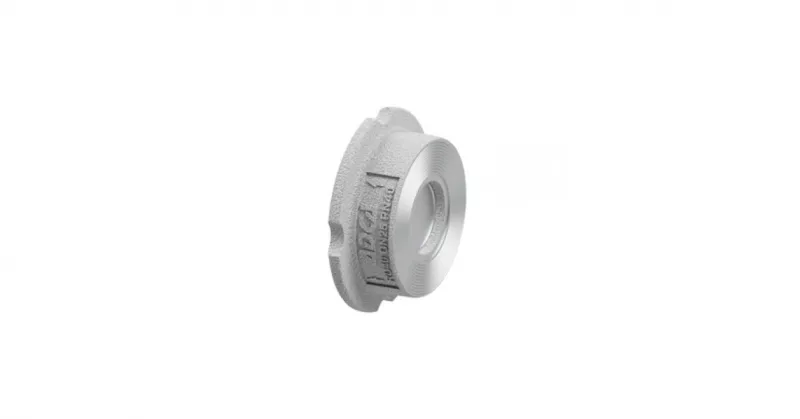
Any self-respecting hydraulic system wants components that guarantee the correct flow of fluids and protect the installation against potential failures. The check valve —also known as a non-return valve— does exactly that: it regulates the passage of liquid in a single direction and blocks the backflow that would damage pumps, contaminate drinking water or cause pressure losses. Anyone working with pipework, pumping systems or drainage networks should have a thorough grasp of these devices. What follows lays out what they are, how they operate and which criteria to follow when choosing and installing the right type for each case.
A check valve is, at heart, a device that lets fluid pass in one direction only. When the liquid tries to flow backwards, the internal mechanism closes automatically and blocks the passage. Hence the name "non-return": the whole point is to stop water —or any other fluid— from returning the way it came.
Why does this matter so much? In a pumping system, the moment the pump stops, the water tends to flow back under gravity or residual pressure. With nothing to stop it, that mass of water slams into the equipment, can damage the mechanical seals and, in extreme cases, bursts pipes. The check valve blocks all of that by closing instantly. It also defends against cross-contamination in drinking-water networks: when pressure drops sharply, wastewater can find its way back into the clean supply. A properly fitted non-return valve shuts that door for good.
The job of these valves runs beyond simple directional control. They keep system pressure steady by stopping the pumped fluid from leaking back towards the source, which saves energy and cuts electricity consumption. Pumps, especially centrifugal ones, suffer a great deal when flow runs through them in the wrong direction; the valve shields them from that mechanical stress.
On installations with several pumps running in parallel, every discharge line wants its own check valve. Without one, a stopped pump acts as a hydraulic short circuit: water driven by the other pumps recirculates back through it instead of moving on to its destination. The outcome is wasted energy and performance well below expectations.
The check valve should not get mixed up with other valve types. A conventional ball valve, for example, allows flow to be regulated in both directions through a lever; it has to be operated manually. The check valve, in contrast, works on its own: it reacts to changes in pressure and flow direction without anyone having to touch it.
Gate and globe valves let the passage be left partially open to dial in the flow rate. A check valve offers no such option: it is either fully open —when flow runs in the correct direction— or completely closed. A binary mechanism. That said, it is engineered to produce the minimum possible pressure loss during normal operation, something that regulating valves do not prioritise because their job is different.
Operation rests on differential pressure. When the fluid flows in the correct direction, upstream pressure pushes the closing element —disc, ball or swing flap— and lifts it off its seat. The passage stays clear. The moment that pressure drops or the fluid attempts to flow back, the obturator returns to its original spot and seals the pipe.
No electricity is required. No sensors, no external intervention of any kind. Plain physics drives the response, so the valve reacts on the spot whenever conditions shift. In systems where gravity or sudden pressure variations could trigger dangerous backflow, that autonomy makes the difference between a reliable installation and one prone to failure.
The specific mechanism varies with the design. In a ball check valve, the fluid pushes the sphere to one side and runs around it. When the flow stops or reverses, the ball drops by gravity onto a conical seat and seals the passage. A very simple system, with few moving parts and, therefore, few things that can fail.
Swing check valves carry a disc on a shaft that lets it rotate. Fluid pressure pushes the disc upwards; when that force disappears, the weight of the disc and the reverse pressure return it to its place. Spring-loaded piston check models add a calibrated spring that holds the obturator closed until pressure beats a certain threshold. The advantage here is speed: the spring returns the piston to its seat in milliseconds, which matters in high-pressure applications where every fraction of a second counts.
Water hammer happens when flow stops abruptly and pressure waves travel along the pipe at high speed. Those spikes can beat the normal working pressure several times over and cause serious damage: burst pipes, joint failures, pump breakdowns and a drastic shortening of the installation's service life.
A well-chosen check valve takes the edge off that risk. It does not slam shut; instead, it closes progressively, with the disc reaching its seat just before reverse flow picks up speed. Modern models carry dampers, tuned springs and soft-closing designs that minimise the impact. Fitting a check valve close to the pump is a basic precaution: when the equipment stops, the water column in the discharge pipe tends to come back with force and, without proper protection, that return spawns destructive pressures.
One of the simplest and most robust designs. A metal —or composite— sphere moves freely inside the body. The fluid pushes it upwards and to one side; the moment flow ceases, the ball drops onto its seat and closes the passage.
It works well on drainage lines, wastewater systems and vertical pipes with upward flow. Its tolerance for fluids carrying solids in suspension is remarkable: where other designs clog or wear quickly, the ball holds up. The cost stays low and maintenance is minimal. The preferred orientation is vertical, although it can also be installed horizontally if conditions allow.
The preferred option for large diameters and high pressure. A circular disc swings on a horizontal shaft, much like a hinged door. When flow runs correctly, the pressure pushes the swing flap open and leaves a wide passage with very little pressure loss. That matters a great deal in installations moving large volumes of water.
Closure is progressive: as the flow rate drops, the swing flap moves down until it rests on the seat. The result is a lower risk of water hammer compared with other designs that close more abruptly. Many models carry counterweights or assist springs that let the closing behaviour be tuned to system conditions. They turn up routinely in municipal pumping stations, treatment plants and the discharge lines of high-capacity pumps.
Here the closing element is a cylindrical piston that travels inside a high-precision guide chamber. A calibrated spring holds it closed until the fluid pressure overcomes it. When flow stops, the spring sends it back to its seat in milliseconds.
That speed of response is the headline advantage. On high-velocity pumping systems, industrial process lines with frequent changes of direction or high-pressure pneumatic and hydraulic circuits, instantaneous closing heads off plenty of problems. The design is usually compact, which fits well where space is tight. Performance in the horizontal position is excellent, which is not always the case with valves that rely solely on gravity.
Orientation is everything. These valves carry an arrow stamped on the body indicating the permitted flow direction. Fitting the valve the wrong way round blocks the system completely, a mistake more common than one might think. Before tightening a single nut, the orientation should be double-checked.
In pumping systems, the valve goes on the discharge line, immediately after the pump and ahead of any manual valve. A straight run —somewhere between five and ten pipe diameters— should be left so the flow can stabilise without turbulence affecting operation. Ball check valves prefer upward flow in vertical pipes; swing check valves work better horizontally or with the rotation axis perpendicular to the flow. On drinking-water networks, the non-return valve sits upstream of the points of use to head off contamination by backflow.
What you need depends on valve type, pipe material and system specs. Threaded metal pipes call for transition nipples, PTFE tape or thread sealant and, when future maintenance is on the horizon, unions that let the valve come out without cutting long sections of pipe. For PVC or other plastics, solvent cement, threaded adaptors and, sometimes, transition flanges are essential.
Flanged valves —standard on industrial installations— want compatible bolts, gaskets suited to the fluid and the working pressure, and occasionally insulating washers to prevent galvanic corrosion between dissimilar metals. The tightening torque specified by the manufacturer has to be followed to the letter, in a crossing pattern that spreads the load evenly. And high pressure? That is where supports and anchors take centre stage. They have to be calculated factoring in the weight of the whole assembly —valve, fluid, pipework— but also the surges produced when pumps start or stop. Water hammer, when it strikes, shakes the entire installation.
Fitting the valve the wrong way round. It sounds unbelievable, although it happens constantly. A technician in a hurry, a barely visible arrow on the valve body, and the system is blocked from the outset. Picking the wrong type does not help either: putting a swing check valve in a vertical line is asking for trouble, because gravity does not act as it should and closure becomes erratic.
Then there is the matter of space. Many people fit the valve right next to the pump, with no five or ten diameters of straight pipe the flow needs to stabilise. The result: constant turbulence, irritating vibration and parts that wear out twice as fast. Even worse is dropping it into a recess where nobody can reach in; when the time comes to service it, half the circuit has to come apart.
Trapped air should not be overlooked either. Starting the system up without bleeding it produces violent opening and closing —like hammer blows— that destroy the seats within a matter of weeks. Ignoring the manufacturer's specifications on pressure or temperature borders on recklessness. Valves have their limits; pushing past them is an invitation to failure.
First, the operating conditions have to be known thoroughly. How much pressure will the valve have to take? The maximum expected pressure has to be compared with the figure the manufacturer quotes as the rated pressure, and a margin should be allowed: 25 % above is the usual recommendation. If the system runs above 100 bar, reinforced valves are the answer, with hardened metal seats and mechanisms capable of taking that punishment without giving way.
Flow rate sets the diameter and type of valve. High flow rates demand valves with low pressure loss, such as large swing check models. For low flow rates, a compact piston check may be enough. Variations have to be factored in: a valve sized for the maximum flow rate may fail to close properly when the system runs at minimum, letting backflow slip past. On pumping installations with variable flow, spring-assisted closing models guarantee proper operation across the entire range.
The material of construction sets service life. For drinking water and general applications, bronze, ductile iron or stainless steel offer good corrosion resistance and reasonable durability. On wastewater carrying abrasive solids or chemically aggressive fluids, higher-grade stainless steels or special alloys of the Hastelloy type may be required. The initial cost is higher, although the drop in breakdowns and maintenance offsets it.
Obturator and seats deserve separate attention. Metal-to-metal combinations stand up well to wear, although they need greater closing force. Elastomeric seats seal better with less pressure, but they have limitations on temperature and chemical resistance. On industrial installations where reliability is the priority, it pays to invest in valves with replaceable internal components: that stretches service life by swapping only worn seats and discs, not the whole valve.
When a valve is replaced in an installation already in service, the dimensions and connection type have to match what is already there. A flanged valve will not slot where a threaded one was without additional work. The pressure loss of the new valve has to be compatible with the hydraulic design: swap a low-loss swing check for a ball check that creates more restriction and the flow rate drops, leaving the pumps overloaded.
On systems with several pumps in parallel, every check valve has to be of the same type and model to keep behaviour uniform. When control or monitoring systems are already in place, valves with position indicators or ports for pressure sensors may be on the spec sheet. Physical space matters: the face-to-face length of the new valve has to be checked against the available gap. Prior experience counts too: sticking with the same brand simplifies spare-parts management, makes it easier to train maintenance personnel, and lets the team apply what they already know about how those valves behave under the particular conditions of each installation.