
Image

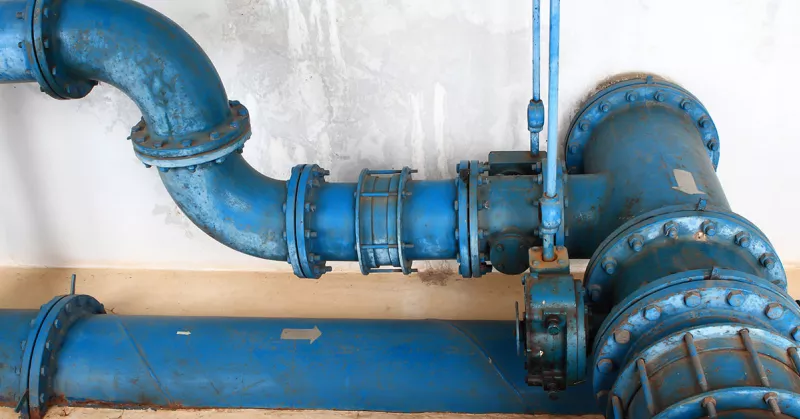
Any technician with a few years on industrial plants knows the noise the moment they hear it: a metallic blow ringing through the pipework, a clear sign that something has gone wrong. Water hammer. The phenomenon has been generating headaches —and fat invoices— for as long as fluid-conveying systems have existed. Valves take the worst of it, with service life cut short whenever the problem is ignored for too long. The pages that follow look at why it happens, what damage it causes depending on the valve type, and how a sound maintenance plan makes the difference between an installation that runs and one that drops dead at the worst possible moment.
Anyone who has ever heard a hydraulic slam in a pipe knows what we mean. Water hammer —or hydraulic transient, to use the technical term— shows up when the flow changes velocity abruptly. The sudden braking generates pressure waves that travel through the system at speeds near the speed of sound, and the outcome is a sharp pressure spike paired with that very recognisable metallic clang.
Things turn serious in high-pressure circuits. When a control valve slams shut, all the kinetic energy of the moving fluid has to go somewhere. It converts into pressure, and the resulting peaks can reach several times the working pressure. Pipes, valve bodies, stems, actuators: the whole assembly ends up absorbing mechanical stresses nobody factored in when the system was originally designed.
A working understanding of this mechanism is what lets you anticipate trouble and act before the damage is locked in.
Valves do not react to water hammer in the same way. Ball valves, for instance, seal beautifully and operate fast, and it is that same speed that makes them vulnerable: on closing they shut the flow practically dead, kicking off severe transients. Plant technicians know this the hard way.
Butterfly valves —so popular for their compact size and friendly price tag— take damage on disc and shaft once the pressure waves start hitting their internals. Gate valves work more slowly, true, but they are not spared either: vibration grinds away at the sealing mechanism over time.
What about globe valves? Their regulating capability falls off as the seats erode under repeated overpressures. Check valves, designed precisely to block reverse flow, can fail spectacularly when shock waves go beyond what they were ever specified to handle. Plug valves see their sealing surfaces age faster than the catalogue promises.
Each valve family wants its own maintenance approach if it is to last as long as it should.
The trouble with water hammer is that the effects pile up. Every overpressure leaves microcracks in the body, loosens threaded connections a little, bends the stem by a fraction and chips away at the sealing surfaces. Nothing shows at first. Then those microscopic faults grow, and one day what started as a drip ends up as a serious breakdown.
In areas where the metal has been stressed past its limit, corrosion picks up speed. Sealing components —elastomeric or metallic— lose their tightness when forced through repeated extreme pressure cycles. Actuators drift out of alignment and wear prematurely.
A valve that should run for decades sees its life cut to a handful of years, or even months, once water hammer events become routine. That cut is not only the cost of repair and replacement: it also means unplanned downtime, lost production and risks to people on the floor.
The most common cause is the obvious one: closing a valve too quickly. When an operator with no proper training shuts a ball valve in under two seconds on a high-pressure line, they are setting up perfect conditions for a severe transient. The fluid moving at steady velocity gets stopped in a heartbeat, and all that kinetic energy has to dissipate at once.
It gets worse when the control system has not been programmed to modulate closing speed against operating conditions. Another delicate moment is pump start-up and shutdown: when several units kick in or come off at once with no staggered sequence, the surges compound. You see it constantly on installations where nobody has bothered to programme acceleration ramps.
Working out closing time accurately for every point in the layout —pipe length, diameter, fluid velocity, valve type all factored in— is not engineering navel-gazing. It is what separates a smooth operation from a chronic headache. Part of the maintenance work, in fact, consists of checking at regular intervals that the actuators still meet the times set by the manufacturer at the start.
Butterfly valves come with their own quirks. The design, so handy in other respects, makes them the usual suspects when water hammer trouble crops up. The rotating disc throws off serious eddies when half-open, and on reaching full closure it cuts the flow rather sharply. Not much wiggle room there.
Let maintenance slide and the bushings supporting the shaft give way; the disc loses its original alignment. The outcome? Uneven closures, sometimes faster than they should be. Stem corrosion brings another gift: the valve sticks halfway through travel and, when it finally gives, it goes all at once. Without lubrication, friction shoots up and the actuator ends up pulling harder than spec to break through the resistance.
In high-pressure circuits, half-open butterfly valves are prime territory for cavitation. The bubbles that form and collapse gradually eat away at disc and seat. Seal elastomers, meanwhile, stiffen up with heat or chemical contact, and a point comes when they no longer follow the disc on the way to closure the way they should.
Full-bore ball valves come built with a bias toward severe transients: their quarter-turn operation goes from full open to full closed in under a second. Gate valves close more gradually thanks to the vertical-lift design, although when the stem threads go uncleaned they can drop suddenly all the same.
Valve size against pipe diameter has a heavy say in things: an undersized valve running at high velocity will produce far worse transients than one properly sized for the duty. Actuator selection matters in the same way; an actuator with too much torque will shut the valve faster than safe, while an underpowered one tends to produce erratic motion.
Putting in place a preventive maintenance programme changes how an industrial installation runs. The most immediate gain is the drop in unplanned downtime: technicians spot and correct problems before they grow into catastrophic failures.
When every valve gets inspected on a regular cycle, early signs of wear, corrosion or misalignment that would have led to erratic operation get caught. Scheduled lubrication keeps moving parts running smoothly and ensures opening and closing times stay within safe ranges.
On the financial side, every pound spent on preventive maintenance comes back several times over in costs avoided: emergency repairs, premature replacements, lost production. Installations that adopt the practice often double or triple the period between replacements. Cutting leaks saves product, improves environmental safety and lowers risks for staff.
Small leaks are the heralds of bigger failures, and the symptoms of damage left behind by earlier water hammer events. When technicians work through the sealing system methodically during scheduled inspections, they catch deterioration in packings, gaskets and seats before it spreads.
An incipient leak on a ball valve may point to seat erosion from pressure transients, flagging the need to look at operating conditions. On gate valves, leaks around the stem suggest packing deterioration, although they may also mean the stem has been bent by repeated overpressures.
Inspections reveal patterns. If several valves in one section show leaks at the same time, there is a systemic problem —most likely recurring water hammer— affecting the whole area. Modern programmes deploy ultrasound and thermography to catch internal leaks invisible from outside.
During every scheduled inspection, technicians need to work methodically through every aspect of operation. The starting point is a visual sweep of the body to find cracks, deformation or corrosion that hint at past overpressure events. Stem inspection reveals whether it is bent, pitted or corroded.
Actuator inspection includes the mountings and connections; on pneumatic units, the integrity of diaphragms and seals. Functional tests confirm each valve operates within the specified times: a valve that closes faster than designed is a clear warning. Operating-torque measurement catches increases in friction.
Detailed records build a history that makes it possible to spot deterioration trends and predict when intervention will be needed, before a failure ever happens.
Every valve family asks for strategies matched to its design and to operating conditions. For ball valves, the programme has to centre on preserving seat and ball integrity: quarterly inspections of the seal, lubrication with products compatible with the manufacturer's recommendations, and verification that the actuator still maintains adequate operating times.
Butterfly valves call for special attention to disc alignment, half-yearly inspection of bushings, lubrication of pivot points and assessment of the elastomers before they harden past usefulness. Gate valves want regular cleaning of the stem threads to head off deposit build-up, plus wedge inspection and packing verification.
Globe valves need periodic actuator calibration, detailed inspection of seats and discs to catch erosion early, and verification of the control system response. Check valves require confirmation that the closing mechanism works without sticking, which would otherwise lead to sudden closures.
Lubrication is one of the most critical aspects of valve maintenance —and one of the most neglected. The choice of lubricant has to rest on the manufacturer's recommendations, with operating temperature, fluid type and construction materials all in the equation.
On ball valves, lubricating stem seals with quality synthetic greases keeps friction at bay. Butterfly valves want careful application on bushings and shaft pivots, avoiding excess that would contaminate the flow while still ensuring proper coverage. For gate valves, be generous with the lubricant on the stem thread; ideally the product chosen should offer some protection against rust as well.
Make sure the grease or oil used is not attacking the valve's rubbers and elastomers; an incompatible lubricant can destroy seals in a matter of weeks. Greasing intervals are not carved in stone either: if the valve runs in a corrosive environment, or cycles many times a day, those intervals have to be shortened.
Control valves are a case apart. Their job is to trim flow rate with millimetric precision, so any backlash or response lag eventually shows up in the process. The first priority is keeping actuator and positioner in good order: the signal coming from the control system has to translate, without hesitation or overshoot, into the exact position called for.
On inspection, confirm the stem slides freely from one end of travel to the other. Response tests verify the valve reaches the right position in the right time, neither early nor late. It does no harm to peer inside the body for erosion signs, especially if the fluid carries particles or if cavitation is suspected.
Pneumatic actuators have their weak spots: diaphragms that crack, springs that lose tension. Electric actuators ask for monitoring of motor and gearbox. Keeping an orderly record of response times, travel and detected leaks builds, year on year, a history that lets you anticipate problems before they show their face.
The first step, before drafting a single procedure, is to know what is installed. That means walking the plant with a notebook in hand —or a tablet, since we are in the twenty-first century— and drawing up a complete inventory: type of valve, duty, operating conditions, and how critical each one is. Priorities get set on the basis of risk analysis: valves in critical high-pressure services handling hazardous fluids ask for tighter inspection frequencies.
Detailed procedures are then drafted for each category: what to inspect, what tools are needed, what criteria flag a repair, what lubrication to apply. Frequencies come from both the manufacturer's recommendations and from operational experience.
Technical staff need thorough training, with enough background to grasp not only the mechanical steps but the reason behind each activity. A documentation system —preferably digital— gets put in place to record every intervention, finding and corrective action. Performance indicators are defined: failure rates, downtime, repair frequency. Periodic reviews of the programme become a routine so that opportunities for improvement keep surfacing.
This aspect goes beyond simple product savings. Leaks in industrial valves rarely show up all at once; they typically begin as imperceptible micro-leaks and progress as the sealing system deteriorates under the compound effects of thermal cycling, corrosion, erosion and water hammer damage.
A well-run programme catches that progression in the early stages, when the intervention is simple and cheap: readjusting packings, replacing gaskets preventively, lapping seats that are only lightly damaged. Ball valves with incipient leaks can often be corrected with proper lubrication or actuator adjustment, no full disassembly required.
Every leak prevented saves product, pumping energy, emission-treatment costs and potential regulatory fines. Leaks create safety risks too, especially with flammable, toxic or corrosive fluids.
The first strategy is to keep valves inside their design envelope: pressures, temperatures and flow velocities below maximum specifications cut wear rates dramatically. Corrosion protection through compatible materials and protective coatings comes next.
Keeping all moving parts properly lubricated avoids not only direct wear but also the erratic operation that feeds water hammer. Putting in place operational controls that prevent rapid closures, configuring actuators for appropriate timings and programming sequences that minimise transients matters every bit as much.
Preventive replacement of components with predictable wear —packings, gaskets, elastomers— before they fail, together with system-wide safeguards such as pressure relief valves and surge tanks, rounds out the integrated approach. Tracking closely how performance evolves over time, mining the operating data for trends, opens the door to intervening before degradation has run too far.
Pressure relief valves are the first line of defence against overpressure, and they have been proving their worth for decades. Their operation is no mystery: when pressure climbs above a preset threshold, they crack open on their own and release fluid in a controlled fashion to relieve the system. The internal spring mechanism keeps them shut under normal conditions, then gives way the moment pressure forces beat the spring preload.
Placing them in the right spots —immediately downstream of fast-closing valves, near the pumps— provides protection where it is most needed. That said, sizing them properly takes some calculation: you have to work out the worst-case transient the system could see and the discharge capacity required.
Maintenance on these valves does not tolerate sloppiness, because when the moment comes they can decide between a scare and a disaster. Inspections check that the spring still holds its setting, that no leaks are skewing the set pressure and that the mechanism moves freely. Periodic functional tests confirm the valve opens at the specified pressure.
Picking the right valve determines, from the outset, just how exposed the system will be to water hammer. When precise flow control is the priority, globe valves have the edge: the design supports gradual regulation and progressive closure, heading off sudden pressure changes.
On large-diameter systems calling for full open and full closed operations but in a controlled manner, butterfly valves with actuators configured for extended timings offer the best balance. Ball valves, brilliant for isolation thanks to their tight seal, want using with caution on high-velocity lines —ideally with actuators programmed for slow operation.
Slow-closing check valves are an innovation built specifically to prevent transients, with damped mechanisms that close progressively rather than abruptly. Bringing the manufacturer into the conversation during selection, with full data on operating conditions on the table, ensures the specified valve actively contributes to prevention.
Latest-generation ball valves come with seat designs whose special profiles create a progressive closing zone over the last few degrees of rotation. Some manufacturers have gone further and designed internal chambers with small bypass passages; as the ball closes, those passages let pressure equalise on both sides without the customary final slam.
The new generation of butterfly valves arrives with discs whose shapes have been modelled on computer to generate less turbulence as the fluid passes through. The seals fitted manage to keep their tightness without seizing, which translates into smoother and more predictable motion.
The biggest leap forward, probably, has come from actuators with integrated electronics. A microprocessor lets the engineer define bespoke speed curves: gentle start, steady pace through the middle stretch, progressive braking before the end stop. Some models carry pressure sensors that watch what is happening in the line in real time and adjust the motion profile on the fly if anything unusual shows up.
Materials have taken their own leap. Alloys engineered to resist erosion, ceramic coatings that stretch service life in harsh duties —and plenty of modern valves now embed diagnostic systems that flag problems before any shutdown gets called. Put together, it turns the valve into something more than a passive component: it becomes an active element that looks after itself and after the system.