
Image

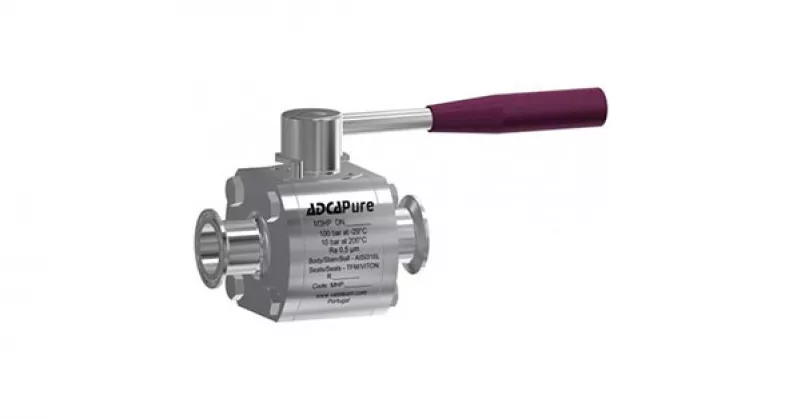
Isolation valves — older operators in the field still call them block valves, or shut-offs if you grew up around domestic plumbing — exist for one reason. They stop flow. Fully. Not 80%, not "almost", not "good enough for now". Throttling is somebody else's job; a globe valve, a needle, a control valve with a positioner. An isolation valve has two states a maintenance crew cares about: open, or shut tight enough that the line downstream can be opened safely. Try pulling a centrifugal pump from a hot service in a refinery without a proper block downstream of the discharge and upstream of the suction. You can't. The job stops there.
You find them everywhere. The 1/2-inch quarter-turn under the kitchen sink, the 36-inch gate in a transmission pipeline, the cryogenic ball valve sitting at -160 °C in an LNG terminal. Specialist manufacturers — Comeval Valve Systems is one, alongside the usual names: Velan, KSB, Cameron, Bray — have built fairly complete catalogues for almost every duty. Different envelopes, different materials, different seat technologies. The principle behind them hasn't moved much in seventy years: present a barrier across the bore, hold it there, and don't leak when somebody puts pressure against the wrong side of it.
The mechanics look simple from the outside. A handwheel, a lever, sometimes a yellow pneumatic actuator strapped to the top. Underneath that, the closure element either travels in a straight line — what the standards call linear or rising-stem motion — or it rotates a quarter turn. A gate valve raises and lowers a wedge. A ball valve spins a sphere. Same end result, very different feel in the hand and very different demands on the packing area around the stem.
Rising-stem designs close progressively. The stem moves perpendicular to the flow, the wedge or the disc edges further into the seat with each turn of the wheel. That gradual closure is the reason large water and steam systems still specify them: water hammer, the pressure surge that propagates back up the line when you slam a valve, can punch holes through pipework in ways that surprise people the first time they see it. ASME B31.4 talks about it in terms of allowable surge pressures; MSS-SP-92 covers the gear operators that keep it manageable on bigger sizes. Manual handwheels, bevel gears, electric MOVs from Rotork or Limitorque, scotch-yoke pneumatics — the choice depends on torque, on whether you need fail-safe behaviour, on whether anyone is going to be standing next to it during a trip.
People mix isolation valves with control valves all the time, and you can see why. They both sit in a pipe, they both have a stem, they both move when something tells them to. The difference is what you ask them to do. An isolation valve goes hard open or hard shut. A control valve lives in the middle, modulating against a 4-20 mA signal from a controller, with a trim — equal percentage, linear, quick-opening — chosen for the process curve.
The full-bore geometry matters. A wedge gate or a full-port ball, when fully open, presents almost no obstruction. Pressure drop is in the noise — fractions of a psi at line velocity. Over a 20-year operating life on a long pipeline, that lost head adds up to real pumping cost. Isolation valves are also specified for low cycle counts. A control valve might stroke 50 times an hour, year after year. A block valve might be operated four times in its working life: commissioning, two shutdowns, decommissioning. Different design lives, different wear assumptions, different maintenance planning.
Hybrid designs exist — characterised ball valves, V-port balls, segmented designs that try to do both jobs. They have their place. In serious process work the line still divides cleanly. When safety cases reference an isolation valve, they expect zero leakage to ISO 5208 Rate A or API 598 standards, not "mostly closed". The instrument that regulates and the device that isolates are usually two separate items, with a check or a positive isolation between them.
Gate valves are the oldest design still in volume production. Wedge or parallel slide, the closure element drops vertically across the flow path. When the wedge is fully retracted into the bonnet, the bore is clear. Fluid moves through with the resistance of a straight piece of pipe. The seating geometry — metal-to-metal, with the wedge driven hard against two angled seats by stem thrust — is what gives them their bubble-tight performance under high differential pressure.
They tolerate dirty service better than people expect. Produced water with sand fines, condensate with paraffins, steam at 540 °C — gate valves cope. The trade-off is operating speed. A 12-inch gate on a Class 600 service might take 60-80 turns of the handwheel to fully stroke, which is fine when you have time and bad when you have a fire. ASME B16.34 sets the pressure-temperature ratings; API 600 and API 6D cover the heavier industrial and pipeline duties.
Comeval, like the rest of the established manufacturers, supplies them in a wide spread of materials. Cast iron and ductile iron at the bottom of the range for cold water duty. WCB carbon steel through CF8M stainless for general process. 2205 duplex, Inconel 625, Monel 400 when you get into seawater, sour service that needs NACE MR0175 compliance, or chlorinated organics. One thing that catches projects out: rising-stem gate valves need vertical clearance equal to roughly the valve's face-to-face plus the stem travel. On a DN 300 it's a metre and a half of headroom above the bonnet. Skid designers forget this and end up cutting access platforms after fabrication. Non-rising stem variants exist but they hide stem position from the operator, which is its own problem.
Ball valves took over a lot of duties from gates from the 1970s onward. A drilled sphere, two soft seats — usually PTFE or RPTFE for general service, PEEK or graphite-reinforced material for higher temperatures — and a quarter-turn lever or actuator. Quick to operate. Visually unambiguous: the lever sits parallel to the pipe when it's open, perpendicular when it's shut. No guessing.
Sealing is excellent across a wide pressure range. The soft seats deform slightly under contact load and deal with low differential pressures that metal-seated gates struggle with. They're compact face-to-face — sometimes half the length of an equivalent gate — and the breakaway torque is manageable up to fairly large sizes. Limitations are real, though. Throttling kills them: cavitation between the partially open ball and the downstream seat erodes both within a season. PTFE seats tap out around 200 °C; above that you specify metal-seated balls with the cost penalty that brings. And in fire service, you need fire-safe certification to API 607 or API 6FA — soft-seated balls melt their primary seal in a pool fire and rely on a secondary metal-to-metal seat to maintain integrity.
Engineering departments at Comeval and elsewhere have worked around the throttling problem with characterised V-port balls and triple-offset designs that borrow from butterfly geometry. For tight shutoff in gas, oil and chemical service, the standard floating or trunnion-mounted ball valve remains the default specification on most modern projects.
Butterfly valves used to be considered the cheap option. A disc rotating on a central or offset shaft, sitting inside a wafer or lugged body. Light, short face-to-face, easy to actuate. Older concentric designs — disc centred on the shaft, with the shaft passing through the seal — were genuinely limited to low-pressure water, HVAC chilled water loops, that kind of duty. Then the offset and triple-offset designs came along. Now you find butterfly valves in cryogenic LNG service and in 600# steam isolation. Different valve, same name on the drawing.
The wider isolation family is bigger than most lists make it look. Globe valves do isolation duty when pressure drop is acceptable and tight shutoff matters. Diaphragm valves — Saunders pattern, weir or straight-through — handle slurries, ultrapure water for pharma, aggressive acids; the elastomer or PTFE diaphragm seals around suspended solids that would chew up a metal seat. Plug valves, lubricated and non-lubricated, hold on in pipeline gas service. Knife gate valves dominate slurry handling: pulp and paper, mining tailings, wastewater with rags and stringy solids that would jam any other closure element.
Each design has the duty it was built for. Putting a soft-seated ball valve into hot fly-ash slurry service because someone got a good price on it is the kind of decision people regret six months later. The catalogue exists for a reason.
Selection starts with the fluid. Composition, temperature, pressure, what's entrained in it. A clean dry gas at 40 bar and ambient temperature gives you almost free choice. A two-phase flashing hydrocarbon with H₂S above 50 ppm narrows the field down to a handful of NACE-compliant options before you've even discussed valve type. Sizing rarely means matching the line size — it means matching the duty. An undersized block on a relief header chokes the flow during a depressurisation and can defeat the relief case. An oversized actuator on a small ESD valve burns through air supply and slows the trip.
Cycle frequency steers the choice as much as anything else. Quarterly maintenance isolation? A manual gate is fine, even if it takes two minutes to close. Daily process changeover with a ten-second swing requirement? Get a pneumatically actuated ball with a quick-exhaust valve on the actuator. Emergency shutdown on a SIL-rated loop? You're now looking at certified valves with partial-stroke testing capability and a documented PFD calculation.
Physical envelope kills perfect-on-paper choices all the time. Rising-stem valves want headroom. Lever-operated quarter-turns want swing radius. Geared operators add bulk on the side. Insulation jacketing on hot service can swallow another 100 mm of clearance. And the maintenance access — the ability to remove the bonnet, unbolt the actuator, get a hoist over the top — matters more than the valve datasheet ever shows.
Comeval Valve Systems and the other established suppliers publish selection software and sizing tools. They're a starting point. The engineer who walks the unit, talks to the operators about which valves get cursed at during turnarounds, and reads the past five years of maintenance reports will make better decisions than any sizing wizard.
Material compatibility is unforgiving. Strong mineral acids — sulphuric above 50%, hydrochloric, nitric — will tear through standard 316L in months and need Hastelloy C-276 or PTFE-lined bodies. Caustic above 70 °C attacks 304 stainless through stress corrosion cracking. Chloride-bearing service over about 60 °C does the same, which is why duplex 2205 appears so often in offshore produced water. Carbon steel valves in salt water service have the working life of a paper umbrella, and people still try it.
Gas service raises the bar on sealing performance. A weep that's harmless in a water line shows up on a soap test on a hydrocarbon vapour line and triggers an LDAR violation. Trunnion-mounted ball valves with double piston-effect seats and emergency sealant injection ports handle the demanding gas duties. Methane fugitive emissions are now reportable in most jurisdictions, which has driven the move to low-E packing certified to ISO 15848 or API 622.
Slurries and high-solids flows are mechanically abusive. Particulates work like grinding paste on any seating surface they reach. Knife gates with replaceable seat inserts, full-bore gate valves with hard-faced wedges, or pinch valves where the only wetted part is an elastomer sleeve — those handle the duty. Viscous fluids — heavy crude, bitumen, molasses, asphalt — increase breakaway torque significantly; manual operation becomes impractical above DN 100 and electric or hydraulic actuation gets specified almost by default.
Pressure-temperature ratings come straight out of ASME B16.34. Class 150, 300, 600, 900, 1500, 2500 — each has a curve that drops as temperature climbs. A Class 300 carbon steel valve rated for 49.6 bar at ambient is down to about 28 bar at 425 °C. People read the cold rating off the body and forget the derating. The result shows up later as a bonnet gasket weeping or a flange leaking at operating temperature.
Soft seat materials are the temperature limit on most ball and butterfly valves. Standard PTFE: about -29 to 200 °C. Reinforced PTFE pushes that a little. PEEK extends it to around 260 °C. For cryogenic service down to -196 °C you need extended bonnets to keep the packing area above the dew point and specific seat materials qualified for low-temperature impact properties — Charpy testing per ASTM A352. Differential thermal expansion across the body also matters: a valve that seals at -40 °C in a Canadian winter morning may need re-torquing of the bonnet bolts when it warms up.
Surge events deserve their own analysis. Quick-closing ball valves on long liquid lines generate water hammer pressures that can exceed the static rating by a factor of two or three. The Joukowsky equation gives you the order of magnitude; a transient analysis in software like AFT Impulse or Pipenet gives you the answer you can defend to the safety case. Specifying valve closure speed is not a detail — it's part of the safety design. Manufacturers like Comeval publish derated curves and recommended closure rates by valve size and class. Use them. The alternative is finding out what the bonnet flange does at 1.5 times design pressure, and that's a conversation nobody enjoys having on a Monday morning.
Preventive maintenance on isolation valves is unglamorous and underbudgeted in most facilities. The valves that get attention are the ones already leaking. The ones quietly seizing in the open position get noticed during the next turnaround, when somebody tries to close them and discovers the stem won't move. For gate valves, the wear pattern concentrates at the wedge faces and the stem-to-disc connection. A disc that's worn out of round won't seat properly; a stem that's bent or galled won't transmit torque cleanly. Visual inspection at every available opportunity, packing adjustment when the gland starts weeping, and a stem grease application on rising-stem designs are the basics.
Ball valves are mechanically simpler but their failure modes are quieter. Soft seats take a permanent set after long periods in one position. Trunnion bearings dry out. The sealant injection ports — if specified — need periodic refilling with the manufacturer's grease. Lever valves develop a characteristic dead band as the seat compresses around the ball; when the lever moves through 10° before the ball starts rotating, something is loose internally.
Butterfly valves are vulnerable at the seat liner where it bonds to the body. Vibration, repeated cycling, and chemical attack at the liner edge progressively degrade the seal. The shaft seals leak before the disc seal does, in most failure histories. There's a piece of advice that gets ignored more than any other in valve maintenance: cycle every block valve at least once a year, even if the process doesn't need it. A valve that hasn't moved in five years has effectively bonded itself to the seat. The first attempt to close it during an emergency is a coin toss between "moves" and "snaps the stem off". Operators who reach for cheater pipes on hand-wheels are reporting a maintenance failure, not solving a sticky valve.
Frequency of intervention scales with service severity. Chloride-bearing seawater: shorten the inspection interval. Catalyst-bearing slurries: shorten it again. Comeval and the other specialised manufacturers publish maintenance schedules per product family, but the actual interval comes from your own failure history.
Seat leakage is the dominant failure mode. In gate valves it shows up as a slow pressure rise downstream of a closed valve, or as the unmistakable hiss of trapped pressure bleeding past. The wedge faces wear, scratch, or pick up debris between the seating surfaces. In ball valves the soft seats degrade thermally, mechanically, or chemically until they no longer recover their shape against the ball.
Stem leakage through the packing gland is the second classic failure. Graphite packing rings degrade slowly under thermal cycling. PTFE chevron stacks compress permanently and lose their interference fit on the stem. The first response is gland adjustment — half a turn at a time, in cross-pattern, with the valve in operation. The second is repacking, which means de-pressurising the line and pulling the gland follower. Live-loaded packing systems with Belleville washers maintain compression as the packing wears, and they extend service intervals significantly on critical valves.
Galvanic corrosion at dissimilar-metal interfaces — usually where stainless trim contacts a carbon steel body — works slowly and fails suddenly. The early warning is staining on the external bolting. Pressure-locking in trunnion ball valves is a different beast: when liquid trapped in the body cavity expands due to temperature rise, the resulting hydraulic pressure can lock the ball in position. The cure is body cavity relief — either a self-relieving seat design, or an external relief line back to a low-pressure header. Specifying the wrong seat configuration in liquid service has welded more than one valve into permanent operation.
Deciding when a valve has reached end-of-life is partly engineering and partly judgment. Operating torque trending upward over multiple cycles points to internal damage. A leak rate that has progressed from "drip" to "stream" between scheduled inspections has crossed a threshold. External corrosion that has reduced wall thickness below the corrosion allowance — checked with a UT gauge against the original mill thickness — disqualifies the valve from continued service regardless of how well it still seats.
Some calls are made for you. A through-wall crack in a pressure-containing component, found during a routine PMI scan or a hydrotest, ends the conversation. Casting defects that grow under thermal cycling, weld repairs that have failed at the heat-affected zone, bonnet flanges with permanent set in the gasket seating area — these are replacement decisions, not refurbishment opportunities. A valve that cannot achieve the leak class required by its safety case is not a valve that can stay in service, regardless of what the rest of it looks like. And when the cumulative cost of repairs and lost production starts to approach the capital cost of a new valve plus installation, the spreadsheet makes the case.
A failed isolation valve is rarely a contained event. The downstream consequence — fire on a hydrocarbon line, environmental release on a chemical service, scalding on a steam line — is what drives the decision threshold lower than people's instincts want it to be. There's an old saying in process safety that gets repeated because it keeps proving true: "The cost of prevention is always less than the cost of an emergency."