
Image

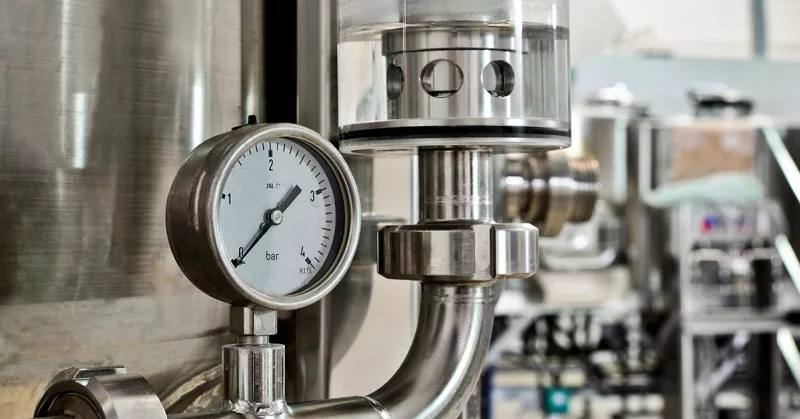
A pressure gauge is one of those instruments that, believe it or not, is everywhere. Have you ever wondered how we know how much pressure there is in a factory's pipes or in your car's tyres? Well, that is where this incredibly useful device comes in. Basically, it lets us know exactly how much pressure gases or liquids are exerting in any system. And trust me, choosing the right pressure gauge for each situation can make the difference between a process that runs like a Swiss watch and one that... well, better not to think about it.
If I had to explain it simply, a pressure gauge is like the thermometer of pressure. It is an instrument that tells us how much force fluids (whether gases or liquids) are exerting at a given location. What is interesting is how these devices convert something as abstract as pressure into numbers that we can read and understand.
From the early mercury columns our grandparents used to the modern digital devices that look like they came straight out of a science-fiction film, these instruments have come a long way. But at the end of the day, they all do the same thing: translate that invisible force exerted by fluids into something we can measure, monitor and, most importantly, keep under control so that everything runs safely.
This is where things get interesting. A pressure gauge is not a one-trick pony; it can measure different types of pressure depending on what you need. The most common is gauge or relative pressure, which basically tells you how much pressure there is above (or below) atmospheric pressure. It is the one we use in 90% of day-to-day industrial applications.
But wait, there is more. When you need to know the total pressure, including atmospheric pressure, then we are talking about absolute pressure. This measurement is like counting from zero, literally from a perfect vacuum. It is the favourite of scientists and you need it in processes where every millibar counts.
And what about differential pressure? This is the one that tells you the difference between two points. Imagine you want to know how much pressure is lost when air passes through a filter. That is where these specialised pressure gauges shine. They can also measure negative pressure, which basically means there is less pressure than atmospheric. It is like when you suck through a straw: you are creating negative pressure.
It is worth pausing here for a moment because this difference can be a little confusing at first. Absolute pressure is like measuring your height from the centre of the Earth: it includes everything. When a pressure gauge measures absolute pressure, it gives you the full value, counting from a perfect vacuum up to wherever your fluid sits.
Differential pressure, on the other hand, is like comparing your height to your brother's. It does not matter whether you are at sea level or on top of Everest; what counts is the difference between the two of you. Differential pressure gauges are perfect when you need to know if there is a blockage in a pipe or if a filter needs changing. They tell you: "Hey, between this point and that one there is a difference of X pressure".
Why is it so important to understand this? Because using the wrong pressure gauge is like trying to measure temperature with a ruler. In meteorology, for example, you need absolute pressure to forecast the weather. But if you are checking a building's ventilation system, what you care about is the differential pressure between rooms.
The magic behind a pressure gauge is simpler than you might think. Take the classic Bourdon tube pressure gauge, which is like the grandfather of all modern pressure gauges. It has a small metal tube coiled like a snail that, when you push pressure into it, tries to straighten out. It is like when you blow into one of those party horns that unroll. This movement moves a needle, and voilà, you have got your pressure reading.
Liquid-column manometers are even more straightforward. The pressure pushes the liquid up a tube, and the height tells you how much pressure there is. The famous mercury manometer worked this way, although we now prefer to use other, less toxic liquids (for obvious reasons).
Digital pressure gauges are another story. They use super-sensitive sensors that convert pressure into electrical signals. It is like having an instant translator between the physical world and the digital one. These sensors can detect tiny changes in pressure and display them on a screen with a precision that would bring tears of joy to any old-school engineer.
Measuring the pressure of a gas is not the same as measuring that of a liquid, and pressure gauges know it. Gases are compressible, like that inflatable mattress that deflates when you sit on it. This means their volume changes a lot with pressure, and gas pressure gauges have to take this into account.
When you work with pneumatic systems (think of the compressed-air tools in a workshop), the pressure gauge has to deal with these variations constantly. It is like trying to measure something that will not keep still.
With liquids it is another story. They are practically incompressible, so a small change in pressure can have huge effects. Pressure gauges for hydraulic systems (like your car's brakes or construction machinery) have to be super precise and robust, because pressures there can be brutal. We are talking about hundreds or thousands of bars, enough to cut steel if released incorrectly.
Temperature also plays its part. A smart pressure gauge compensates for these changes to give you accurate readings regardless of whether it is polar cold or infernal heat.
Reading a pressure gauge correctly is an art form. On analogue ones, the needle tells you the story. But watch out: a reading of zero does not mean there is no pressure; it just means the pressure inside is equal to the pressure outside. It is like being in balance with the surroundings.
If you want to know the absolute pressure and your pressure gauge only gives you the relative one, you will have to do a little maths. Add the local atmospheric pressure (around 1013 millibars at sea level, though this changes with altitude and weather) to whatever your pressure gauge shows.
Digital ones are more straightforward: they give you the number and that is that. But even so, you have to pay attention to the units. Is it in bars? In PSI? In pascals? It is like when you travel and have to convert miles to kilometres.
One important detail: if the needle is shaking like a leaf in the wind or the digital numbers are dancing the macarena, something is wrong. It could be instability in the system or your pressure gauge might be ready to retire. And remember, a pressure gauge working at the limits of its range is like a runner pushed to the edge: it is not going to give its best performance.
The eternal battle between the classic and the modern also exists in the world of pressure gauges. Mechanical ones are like the Swiss watches of yesteryear: they do not need batteries, they are tough as nails, and they keep working when everything else fails. You watch the needle move and you know exactly what is happening. They are perfect for that dusty workshop where the electricity comes and goes.
Digital ones, for their part, are the millennials of the group. They give you surgeon-level precision, they can store data, calculate averages, detect pressure spikes and even send alerts to your phone. "Hey, the pressure in tank 3 is through the roof", your system might tell you while you are having a coffee.
Which one to choose? It depends. If you need something that works in the middle of the desert without electricity, go for the mechanical one. If you want to integrate measurements into your computerised control system and have real-time charts, the digital one is your friend. Many plants use both: digital for fine control and mechanical as a backup for when Murphy's Law strikes.
High-pressure gauges are the heavyweights of the group. They are built to withstand pressures that would blow a normal pressure gauge apart like a balloon at a children's party. We are talking about thousands of bars, pressures you find in industrial hydraulic systems or in the depths of the ocean.
These instruments are battle tanks. They use special materials that do not even flinch in the face of extreme pressures. Many include safety systems such as rupture discs that act as fuses: if the pressure becomes dangerous, the disc breaks before anything worse happens. Better to lose a twenty-dollar disc than to regret an accident.
The connections are also special. No ordinary threads here; they use sealing systems that could withstand a hurricane. Some have internal dampers for pulsations, because at those pressures, even the slightest water hammer can destroy components.
Choosing one of these is not just a matter of looking at the maximum range. You also have to think about chemical compatibility (is the fluid going to eat the pressure gauge?), vibration resistance (is it mounted on an excavator?) and whether it will hold its accuracy after months of relentless punishment.
Differential pressure gauges are the detectives of the pressure world. Instead of telling you "there is this much pressure here", they tell you "there is this much difference between here and there". They have two inlets and show you the subtraction, plain and simple.
Where do these instruments shine? Anywhere the difference matters more than the absolute value. Filters are the perfect example: when they are new, the pressure difference between inlet and outlet is minimal. As they get dirty, that difference grows. It is like a built-in dirt meter.
In hospitals, these pressure gauges are unsung heroes. They keep isolation rooms at negative pressure so that germs cannot escape. In the pharmaceutical industry, they ensure that air always flows from clean zones to less critical ones. A small error here can mean millions in contaminated products.
Ventilation systems also depend on them. Is the air flowing correctly through the ducts? Is there a blockage somewhere? The differential pressure gauge tells you without having to take anything apart. It is like having X-ray vision for your air system.