
Image

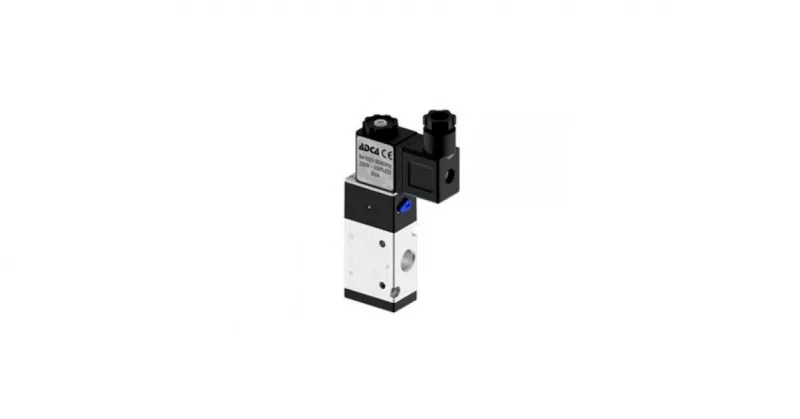
A solenoid valve is, at heart, a tap that opens and closes with electricity. That simplified definition is enough to grasp the concept. Behind it sits an electromechanical mechanism that controls the flow of liquids and gases with a precision and speed no human hand can match. You will find them in factories, in irrigation systems, in agricultural machinery, in water distribution networks, in medical equipment and across countless other applications. If your work involves fluids and any kind of automation, sooner or later a solenoid valve ends up on the spec sheet. The pages that follow lay out what you need to know to pick the right one, install it properly and get the most out of it.
Inside every solenoid valve sits a coil of copper wire wound around a metal core. When the coil takes an electric current, it generates a magnetic field that pulls the core inwards. That small but powerful movement shifts a plunger which releases or blocks the passage of the fluid. Cut the current and a spring returns the plunger to its original position. All of this happens in milliseconds.
The practical upshot is that you can open or close the flow of water, oil, compressed air or any other compatible fluid from a control panel, a PLC, a timer or even a humidity sensor wired through a relay. No one is needed to turn a handwheel. The solenoid valve obeys an electrical signal and acts. That ability to respond instantly to remote commands is what turned it into a routine component of industrial and agricultural automation, long before the term "automation" was even fashionable.
The electromagnetic coil consumes little energy, yet the magnetic field it builds is strong enough to beat the return spring and shift the solenoid core. Typical consumption sits around 8 to 15 watts on small alternating current models, a touch higher on large valves or direct current designs.
The body houses the entire mechanism and defines the pipe connections. Usual materials are brass, stainless steel and engineering plastics such as polypropylene or PVC. The pick depends on the fluid: brass for water and air under normal conditions, stainless steel for acids, foodstuffs or corrosive environments, plastic for aggressive chemicals that would eat any metal.
Inside the body sits the seat against which the plunger rests. The gaskets and seals —NBR, EPDM, Viton or PTFE depending on the case— keep leaks away, both between fluid and atmosphere and between inlet and outlet sides. One detail that gets overlooked too often: seals are wear components. Their service life is limited and it pays to keep spares on the shelf. The good news is that on most quality solenoid valves the complete solenoid can be replaced in minutes, with no need to pull the body out of the pipe.
Two basic states. On a normally closed (NC) solenoid valve, the plunger blocks the flow when no current is present. Apply voltage and it opens. That is the most common configuration because, when the electrical supply fails, the fluid is shut off —usually the safest outcome. On a normally open (NO) valve the opposite happens: the fluid runs freely without current and gets cut off when the coil receives voltage. This setup makes sense on systems where the safe state is to keep flow alive, such as cooling circuits where stopping the flow would cause overheating.
Switching speed depends on size and design. Small direct-acting valves open and close in 10 to 30 milliseconds. Pilot-operated valves run slower, needing between 50 and 500 milliseconds. For the vast majority of industrial and irrigation applications, those speeds are more than enough. Where they are not —fuel injection in engines, for instance— dedicated injectors with even shorter response times take over.
The most common operating voltages are 24 V AC (the industrial standard par excellence), 220 V AC for direct mains connection in domestic and commercial installations, and 12 V DC or 24 V DC for battery-powered systems, mobile applications or integration with digital electronics. At cdfteccon.es we work with all of these configurations and advise on which best suits each project.
The split between hydraulic and pneumatic comes down to the working medium. Hydraulic solenoid valves control liquids: water, oils, chemical solutions. They run at pressures that can exceed 300 bar in heavy machinery applications, and their bodies and seals are sized to handle the forces generated by incompressible fluids under that kind of pressure.
Pneumatic valves work with gases, mainly compressed air. Pressures are lower —between 6 and 10 bar in most industrial networks— and switching speeds are higher, because gas is compressible and puts up less resistance to the movement of the plunger. Pneumatics dominate environments where cleanliness is the priority (food, pharmaceuticals), intrinsic safety is required (explosion-risk areas) or high cycle speed is the goal (packaging, sorting, automated assembly).
The solenoid works the same way in both cases. What changes are the materials of construction, the seals, the pressure range and the type of connection. Picking a hydraulic solenoid valve for a pneumatic circuit, or the other way round, will not work: seals are not compatible, pressures do not match and the result is a leak or an early failure.
The number of ports tells you how many pipe connections the valve carries. A 2-way solenoid valve is the simplest of the bunch: one inlet, one outlet. Opens or closes. That is the entire job. The standard option for filling a tank, kicking off an irrigation zone or cutting off the gas supply to a burner.
3-way valves add a third connection that lets you divert flow between two outlets, or mix fluids coming from two sources. On heating circuits, for instance, a 3-way solenoid valve mixes hot water from the boiler with return water to hit the desired temperature. In pneumatics, the third port works as an air exhaust when single-acting cylinders depressurise.
4-way and 5-way configurations appear mainly in industrial pneumatics, where compressed air has to be sent alternately to both sides of a double-acting cylinder. A double-acting cylinder needs pressure to extend the piston and pressure to retract it; the 5-way valve delivers air to one side while exhausting the other. They are the heart of any automated production line that runs pneumatic actuators. At cdfteccon.es we offer everything from the simplest configurations to multi-pole units for complex pneumatic circuits.
We have already covered the NC versus NO split. The other relevant distinction concerns how the solenoid acts on the plunger. On a direct-acting solenoid valve, the force of the magnetic field shifts the plunger unaided. It works at zero pressure, which makes it ideal for applications where there is not always pressure in the line —gravity drains, vacuum circuits, tanks that empty completely.
Pilot-operated solenoid valves (also known as servo-assisted) use a clever trick: the solenoid opens a small pilot orifice, and the fluid pressure itself then pushes the main diaphragm. This is what lets you control large flows with small solenoids and low electrical consumption. The trade-off is that they need a minimum differential pressure to operate; without it, the diaphragm refuses to lift. If the system can fall to zero pressure at any point, a pilot-operated valve will not suit you and a direct-acting one becomes the answer.
A third option exists, semi-direct or combined action, which blends both principles: the solenoid acts directly at low pressure and takes advantage of the fluid pressure when it is available. It covers a wider pressure range than the other two, but the cost is proportionally higher.
The coil voltage has to match the available power supply. Sounds obvious, yet more people get this wrong than you might think. Wire a 24 V coil to 220 V and it burns out on the spot. Wire a 220 V coil to 24 V and the valve simply will not open.
In industrial environments, 24 V AC is the dominant option. PLCs and most industrial control systems run at that voltage, which is treated as safe for operators (under the electrical risk threshold in dry conditions). On residential irrigation installations, 24 V AC is likewise the standard because every controller on the market runs at that voltage.
220 V AC enters the picture when the solenoid valve gets wired straight to the mains without an intermediate controller. Common on large irrigation systems, domestic boilers and HVAC applications (heating, ventilation, air conditioning) where a thermostat just opens and closes a mains contact.
12 V and 24 V in direct current are the norm in mobile, automotive, solar and battery applications. An irrigation system powered by a solar panel will want 12 VDC solenoid valves. An agricultural vehicle dosing liquid fertiliser will most likely run at 12 or 24 VDC depending on its electrical installation. Direct current coils are more energy-efficient than alternating current ones, but they want correct polarity at the connection and, on some designs, protection circuits against the overvoltage that builds up when the coil is disconnected (the self-induction effect).
Brass is the most widely used material for general-purpose solenoid valve bodies. It resists atmospheric corrosion well, machines easily and the price stays reasonable. It works correctly with drinking water, compressed air, neutral gases and mineral oils at moderate temperatures. Most irrigation, HVAC and light pneumatic solenoid valves carry brass bodies.
Stainless steel moves up a notch in both performance and price. It holds up to dilute acids, saline solutions, seawater, food products, pharmaceutical media and practically any fluid short of concentrated hydrofluoric acid or hot caustic soda. In the food industry, 316L stainless steel with a sanitary finish is a requirement, not an option. The polished surface keeps residues from sticking and lets CIP cleaning run without dismantling the valve.
For highly aggressive chemicals that attack even stainless steel —hydrochloric acid, bromine, chlorinated solvents— engineering plastic bodies (PVC, polypropylene, PVDF, PTFE) are the answer. They weigh less, do not corrode and on many laboratory or water-treatment applications they are the preferred choice.
The internal seals deserve as much attention as the body. NBR (nitrile) covers most services with water and mineral oils. EPDM is the option for hot water, low-pressure steam and compatibility with water-based fluids. Viton (FKM) holds up to hydrocarbons, acids and solvents at temperatures of up to 200 °C. PTFE, chemically inert, comes in when nothing else will hold up. Getting the seal material wrong is just as costly a mistake as getting the body material wrong, because the leak or the degradation shows up all the same.
In a car plant, solenoid valves control the compressed air feeding pneumatic tools, paint guns and welding robots. In a chemical plant, they dose reagents with millilitre-by-millilitre precision. In a wastewater treatment plant, they open and close the dosing lines for chlorine and coagulant. On a juice bottling line, a stainless steel solenoid valve opens and closes five hundred times an hour to fill bottles.
Automated irrigation is probably the application that has the largest number of solenoid valves installed across Spain. A residential garden with four irrigation zones wants four solenoid valves controlled by a programmer. A golf course may have several hundred. A horticultural greenhouse integrates solenoid valves into fertigation systems that dose water and nutrients based on substrate moisture, electrical conductivity and pH sensors.
Integration with sensors and controllers has turned the solenoid valve from a simple hydraulic switch into part of an intelligent system. A rain sensor disables irrigation. A level sensor closes the supply when the tank is full. A timer programmes night-time irrigation cycles to cut evaporation. All of that works because there are solenoid valves that obey electrical signals reliably and quickly.
The first piece of information you want is the flow rate that needs to pass through the valve. If the irrigation zone has ten sprinklers each consuming 800 litres per hour, you want a valve capable of passing 8,000 litres per hour (around 8 m³/h) without an excessive pressure drop. Every model carries a flow-pressure curve in its datasheet; do not rely on the nominal diameter alone.
The operating pressure of the installation has to sit inside the valve's range. Most residential irrigation solenoid valves work between 0.5 and 10 bar. If mains pressure is below 0.5 bar, you want a direct-acting valve that operates at zero pressure; pilot-operated ones will not open.
The connection diameter —1/2", 3/4" or 1" cover most domestic uses— has to match the pipe. Body material has to handle the weather and the limescale in the water; brass with anti-corrosion protection or high-quality plastics are the usual options. The coil voltage has to be compatible with the controller: 24 V AC in ninety per cent of cases. At cdfteccon.es we help size the right valve against the characteristics of each installation.
The controller is the brain of the system. It sends an electrical pulse to each solenoid valve according to the schedules, durations and frequencies you have configured. The electrical connection is straightforward: a common cable (usually white) that reaches all the valves and an individual cable per zone (each colour identifies a station). The wiring runs at low voltage (24 V AC), so a certified electrician or protective conduit is not needed in most jurisdictions.
When laying out the installation, run the numbers so that the controller's transformer can power every valve open at the same time. Most residential systems irrigate one zone at a time so as not to lose pressure, so a standard transformer is plenty. On larger installations —a park, a sports ground— several zones may run at once, and that demands more powerful transformers or master valves that section the network.
Current controllers carry Wi-Fi connectivity, rain sensors and automatic adjustment based on the weather forecast. The outcome is a system that waters only when needed, saving water and dodging the waterlogging that rots roots and damages the lawn. The solenoid valve knows nothing about the weather; it simply opens when the controller tells it to and closes when ordered. All the intelligence sits upstream. Without a reliable valve downstream, though, the intelligence is worth nothing.
The 24 V AC standard locked itself into irrigation for several practical reasons. It is a safe voltage for outdoor use, compatible with simple wiring that can run up to 200 metres without significant losses, and powerful enough to actuate medium-sized solenoids with minimal consumption. Every manufacturer of irrigation controllers designs their kit for that voltage, so compatibility is a given.
In residential gardens, these valves control lawn zones, flower beds, drip lines for hedges and micro-spray lines for flower beds. In commercial applications —golf courses, public parks, landscaped roundabouts, sports facilities— the same valves get used in much larger numbers, coordinated by multi-station controllers with field decoders that let dozens or hundreds of zones be managed from a single point.
The robust construction of these models —treated brass or engineering plastic bodies, coils hermetically sealed with epoxy resin— guarantees years of outdoor operation through rain, frost and heat. Most include a solenoid that can be unscrewed by hand for maintenance or replacement, manual bleed for winter drainage and an integrated flow regulator to balance zones with different needs. The uniformity of voltage simplifies spares management and lets you grow the system in the future without worrying about compatibility.
Compressed air is the invisible energy of industry. It moves cylinders, drives grippers, powers tools, transports materials and blows parts clean on assembly lines. The solenoid valves that control that air have to respond quickly —there are production lines where a pneumatic cylinder cycles several times per second— and survive millions of operations without failing.
The port configuration determines what kind of actuator you can control. A 3/2 valve (three ports, two positions) is enough for a single-acting cylinder with spring return. A double-acting cylinder wants a 5/2 or 5/3 that sends air alternately to each chamber of the piston. On complex production lines, valve blocks (valve islands) group several solenoid valves into a single compact module wired to the PLC's communication bus.
Energy efficiency matters more than it might appear. Generating compressed air costs money: every cubic metre of air at 7 bar consumes around 0.1 kWh of electricity. A valve that leaks or fails to close properly can throw hundreds of euros a year out the window in energy. Many Spanish industrial plants are running compressed air leaks that account for between 20 and 30 per cent of the flow generated. Picking quality solenoid valves with durable seals and fitting them correctly is part of the answer.
Industrial hydraulics works in another league of pressures. An excavator runs at 250–350 bar. A drawing press can pass 400 bar. At those pressures, hydraulic oil transmits enormous forces to cylinders and motors, and the solenoid valves directing that oil have to hold up without deforming or leaking through years of continuous service.
The bodies of these valves come from forged steel or special castings. Internal seals run on reinforced synthetic materials engineered to withstand hydraulic oil at temperatures of up to 120 °C and peak pressures that double the rated pressure. In applications where a failure can injure people —cranes, lifting platforms, hydraulic brakes— the valves build in redundancies: dual solenoids, mechanical emergency pilot operation or locking positions that hold the cylinder in place even if the electrical supply fails.
Maintenance of these valves comes down to keeping the oil clean. Contamination by solid particles is the number one cause of failure in hydraulic components. Pressure filters, return filters and periodic oil analyses are the first line of defence. A hydraulic solenoid valve running with clean oil and inside its specifications can last millions of cycles. With dirty oil, the same valve seizes or wears out within months.
Operating pressure and fluid type are the two parameters that swing the selection more than any others. The minimum operating pressure decides whether you want direct-acting (works at zero bar) or whether you can go for pilot-operated (needs a minimum differential pressure, usually 0.3–0.5 bar). The maximum pressure sets the safety limit: cross it and you risk leaks or rupture of the body.
The fluid dictates the materials. Clean water allows brass and EPDM seals. Water carrying residual chlorine wants stainless steel or plastic. Hydraulic oils call for NBR or Viton seals and metal bodies that can handle the pressures of the circuit. Corrosive chemicals want 316L stainless steel, Hastelloy or a PVDF body depending on how aggressive the medium is.
The viscosity of the fluid drives orifice size and solenoid power. Heavy oils at low temperature are viscous and want larger orifices and more powerful solenoids. Light gases such as air pass easily through small orifices. The temperature of the fluid limits seal materials and the thermal class of the coil: above 80 °C standard NBR seals start to degrade and you have to move to Viton or PTFE. Above 150 °C the options narrow drastically and prices climb.
If the fluid carries particles in suspension —irrigation water with sand, sludges, solutions with crystals— the solenoid valve wants a design that resists clogging or, at the very least, an upstream filter to protect the solenoid orifice. A single particle stuck on the seat blocks closure and turns a valve rated for thousands of cycles into a constantly leaking nuisance. At cdfteccon.es we walk every project specification end to end to make sure the selected solenoid valve matches the fluid, the pressure, the temperature and the real installation conditions.