
Image

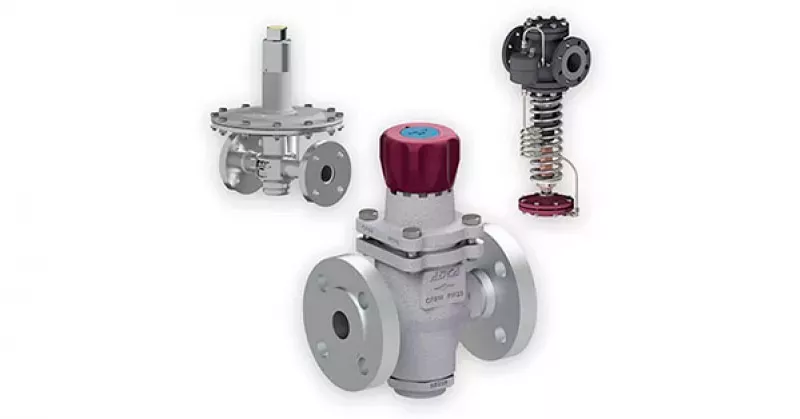
A valve is the small piece of hardware that decides whether the fluid in a pipe goes anywhere or stops dead. Open it and the line moves. Close it and it doesn't. The article walks through what a valve is, what it has to do, and where it ends up — domestic plumbing on one end, refinery duty on the other.
Strip away the textbook phrasing and a valve is a moving part inside a pipe that lets fluid through, holds it back, or trims the amount that passes. It works on liquids and on gases, on water and on steam, on petrol and on slurry. The plumber tightening a tap and the operator opening an isolation valve at the bottom of a column are doing the same thing — moving an obstruction in or out of the way of a flow. Without that one piece of hardware, no pressurised fluid network in the world would be controllable.
The basic principle is dull and useful: shrink the passage, the flow drops; close it altogether, the flow stops. How the obstruction moves is what separates the families. A ball valve rotates a drilled sphere. A gate valve drives a wedge sideways across the bore. A globe valve pushes a disc onto a seat. A butterfly valve pivots a plate on its centreline. Each motion suits a different duty — fast on/off, fine throttling, low pressure drop. The pressure rating is the number that ties everything together. Pick a valve below class for the line and the body weeps long before the seat does, which is the kind of failure you find at three in the morning.
Inside almost every valve you find the same five pieces. The body bolts into the line and contains the pressure. The closure member — disc, ball, wedge, plug — is what actually moves to stop the flow. The seat is the surface it lands on. The stem connects the closure member to whatever is turning it from outside. And the packing or gasket keeps anything from escaping past the stem. Sizes run from a quarter-inch instrumentation valve up to butterfly bodies you have to lift with a crane. Material grade matters more than people remember: a carbon steel body on a chloride service will be perforated in months, where a duplex equivalent shrugs the same fluid off for a decade.
Inside a ball valve sits a sphere with a hole drilled through it. Turn the handle 90° and the hole lines up with the pipe; turn it back and the solid face of the ball blocks the bore. The seal is tight, the action is quick, and the leverage is light enough that a child can shut a half-inch ball valve. That combination is why they dominate isolation duty in everything from domestic gas inlets to refinery sample stations. Pick the trim correctly — PTFE seats for chemicals, metal seats for high temperature — and the same valve handles aggressive service without complaint. Use them for on/off, not for throttling: partial openings erode the seat in a hurry.
Gate valves are old technology and they are still everywhere, which tells you most of what you need to know. A wedge-shaped gate slides perpendicular to the flow. Wind it down and it seals; wind it up and the bore is essentially clear. Pressure drop in the open position is almost nothing, which is why municipal water mains and long-distance transmission lines lean on them so heavily. They were never designed for partial openings — try to throttle one and the gate vibrates, the seat erodes, and the valve quietly destroys itself. Operating mechanism aside, the design today is nearly identical to what was being installed a century ago. The improvements have been at the margins: better packings, smoother stems, longer-life seats.
A check valve does one job and does it without anyone telling it to. Forward flow pushes the disc, ball or flap open. The moment that flow tries to reverse, gravity or a small spring snaps the closure shut. No handwheel, no actuator, no operator. The classic case is downstream of a pump: kill the pump and the column of fluid in the discharge line will try to fall back through the impeller. Without a check valve in the way, the result is water hammer at best and a bent shaft at worst. Sub-types — swing, wafer disc, dual-plate, ball, piston — are picked for the line size, the velocity, and how clean the fluid is. Get the type wrong and the valve either chatters itself apart or fails to seat at all.
The first split is whether a person turns it or a machine does. Manual valves — most ball, gate and globe designs — use a handwheel, a lever or a key. They are cheap, they are reliable, and they need a body standing next to them. That is fine for a workshop and useless for an unmanned compressor station. Automated valves carry a pneumatic, hydraulic or electric actuator on top of the stem. Wire that actuator into a DCS and the same valve obeys a 4-20 mA signal from the control room. The shift to automation reshaped the petrochemical, water and power industries — operators who used to walk fields of manual valves now manage hundreds of automated ones from a screen. The next step is already arriving: smart valves with onboard diagnostics that report seat wear, packing leakage and stroke time back to the SCADA before the failure hits.
Control valves and safety valves get lumped together in conversation but they do opposite jobs. A control valve is active. It sits in the loop, takes a signal from a controller, and modulates its opening continuously to keep flow, pressure or temperature on setpoint. It is working all day long. A safety valve does the opposite — it sits closed and inert until something goes wrong. Cross the set pressure and the disc lifts, the excess vents, the pressure falls back, the valve reseats. One regulates; the other rescues. A plant that loses a control valve has a process upset on its hands. A plant that loses a safety valve has a hole in the side of a vessel. That asymmetry is why safety valves get pulled, tested and certified on a fixed cycle while control valves are usually overhauled when symptoms appear.
Regulating valves are a quieter cousin of the control valve. Instead of taking a remote signal, they sense the variable themselves and react mechanically. A pressure-reducing valve watches its downstream side; the moment the pressure drops below the setpoint, the internal spring opens the trim a little more. Flow regulators do the same trick on flow rate: rising upstream pressure does not push more fluid through, because the trim closes off compensation. Accuracy depends on the model — a basic self-acting regulator might hold the setpoint within ±5%; a piloted version on a clean medium can hit ±1% or better. They show up wherever the alternative — running a control loop with a transmitter, a controller and a powered valve — would be overkill, which is most building services and a surprising amount of process plant.
Petrochemical plants are where valves get tested hardest. The fluid is corrosive, often flammable, sometimes toxic, occasionally all three at once. Temperatures run from cryogenic to several hundred degrees and pressures from vacuum to thousands of psi. Body materials reflect that — duplex stainless, Inconel, Monel, Hastelloy, sometimes PTFE-lined carbon steel for the worst chloride duties. Large-bore gate valves handle main transfer lines. Trunnion-mounted ball valves and lubricated plug valves cover fast isolation. Globe valves and dedicated control valves with smart positioners take the precision work. Specifications are written to API 6D or DIN equivalents and the paperwork — material certs, NDE reports, hydrostatic test charts — often weighs more than the valve. Critical service valves are paired with emergency shutdown actuators on a separate safety instrumented system, because the cost of a delayed close on the wrong day is measured in lives, not euros.
Water treatment is gentler on valves than petrochemicals but stricter about what they are made of. Anything that touches potable water has to be certified — WRAS, NSF 61, ACS — and the materials cannot leach. Gate and butterfly valves dominate the headers because they pass the volumes municipal plants need without taking a bite out of the head budget. The interesting work happens further down the line, where small regulating valves dose coagulant, chlorine or pH-adjusting chemicals at flow rates of millilitres per minute and have to do it accurately enough to satisfy a regulator with a logbook. Check valves at every pump discharge keep contaminated water from finding its way back into the storage tanks. The newer plants have already gone smart: actuated valves reporting position, torque and stroke time to a central SCADA, and operators who haven't physically touched a valve in months.